

Enhancing accessibility: Updates on nonstandard testing arrangements

ASWB Director of Examination Administration
For decades, ASWB has offered nonstandard testing arrangements for candidates with disabilities or other health conditions that prevent them from testing under standard testing conditions — even before the Americans with Disabilities Act was signed into law in 1990. The association has recently introduced enhancements to exam administration that will expand our ability to support all candidates as they take the Social Work Licensing Exams.
The enhancements to nonstandard testing arrangements demonstrate ASWB’s commitment to equitable access, ensuring that all candidates have a fair opportunity to demonstrate their knowledge while advancing continuous improvements in exam accessibility.
ADA certification
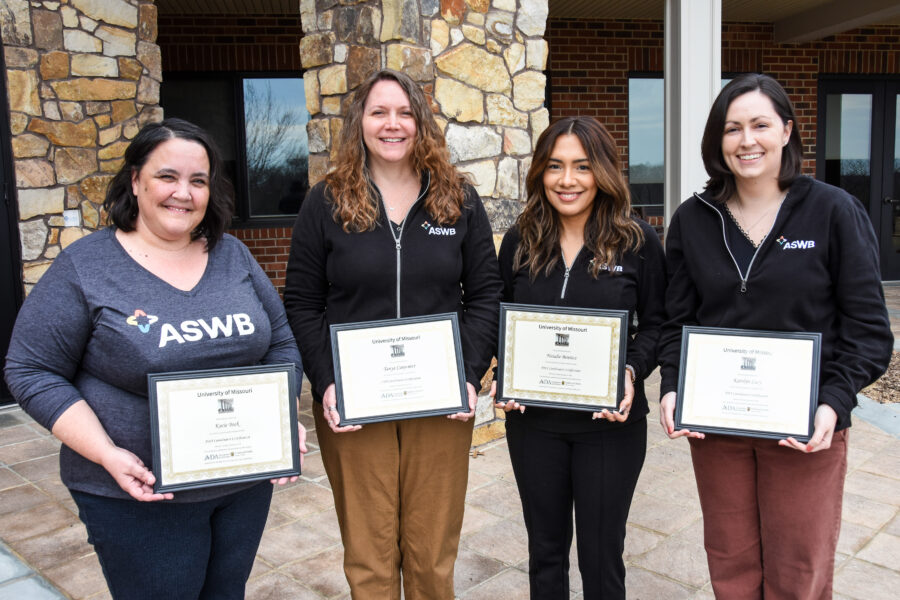
Earlier this year, ASWB staff members who review and approve requests for nonstandard testing arrangements completed a rigorous 30-hour training through the University of Missouri to become certified as ADA Coordinators. These staff members work daily with candidates who have disabilities or health conditions that prevent them from taking their exam under standard testing conditions. Staff gained expertise in the provisions of the Americans with Disabilities Act, helping them better serve candidates and create a more equitable testing experience. The coordinators who completed ADA certification for nonstandard testing arrangements have already demonstrated meaningful impact in their work. They have strengthened communication with candidates, enhanced internal processes, and developed a deeper understanding of accommodation needs. This insight has also enabled them to more effectively advocate for candidates by clearly communicating those needs to the testing vendor.
Expert collaboration
Exam administration staff members are also increasing their expertise through collaboration with licensed social worker and disability advocate Marette Monson of Utah and Sarah Hamilton of the Learning Disabilities Association of Canada. These experts have reviewed ASWB’s processes and materials, including the Nonstandard Testing Arrangements Handbook, to help the association continuously improve its approach. One key takeaway from the collaboration was the reorganization of handbook content to improve readability and accessibility, particularly for individuals with cognitive disabilities. Another was the revision of language used in ASWB materials to be more inclusive and easier to understand.
Computer-based testing enhancements
Innovations in computer-based testing allow ASWB to retire a rarely used accommodation, pencil and paper exams, with the launch of the new exams on August 3, 2026. Today’s testing technology offers many advantages over paper and pencil exams for test-takers who have been approved for nonstandard testing arrangements. Computer-based testing is compatible with assistive technologies such as screen readers, magnifiers, and other technologies for candidates with visual, motor, or cognitive disabilities. It also provides multiple presentation formats (e.g., text enlargement, color adjustments, alternative text, captions). Automated, simplified navigation tools and consistent layout improve test‑taker familiarity, provide clearer instructions, and reduce cognitive load for neurodiverse candidates. Candidates can practice with sample items and tools ahead of time, improving confidence and reducing test anxiety. Exam security and scoring accuracy are also improved because human error is less likely to affect the testing process. Candidates who have received approval for paper and pencil accommodations will be contacted directly. ASWB coordinators will engage with each candidate individually to determine appropriate, accessible alternatives and ensure all accommodation needs are effectively met.
All of these enhancements build on other recent changes, including the introduction of ASWBCentral, increased access to snacks and water during testing, and the addition of an optional break between exam sections. These enhancements to nonstandard testing arrangements demonstrate ASWB’s commitment to equitable access, ensuring that all candidates have a fair opportunity to demonstrate their knowledge while advancing continuous improvements in exam accessibility.