
When standards align
Exploratory study finds connections between social work’s regulatory and educational standards
Have you ever wondered about the connection between the knowledge learned in a social work program and the applied knowledge tested by the social work licensing exams? The Association of Social Work Boards recently explored answers to this common question by conducting an alignment study that found significant overlap, strengthening evidence for the connections among education, licensure, and professional practice.
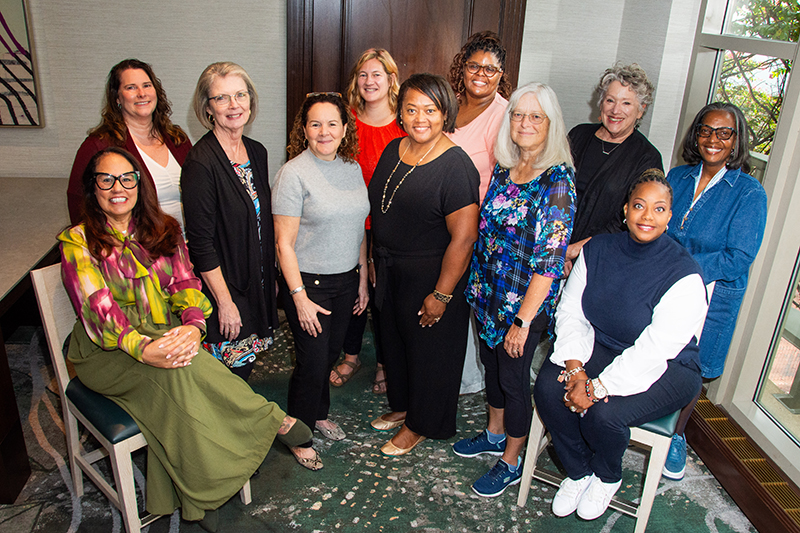
While some have attempted to independently demonstrate the correlation between the content of the social work licensing exams and the Council on Social Work Education’s accreditation standards, no one had conducted a rigorous, psychometrically sound exploration before ASWB did in September 2025. To help fill this gap in understanding, ASWB brought together psychometricians and a diverse group of 11 social work education subject matter experts to examine the alignment between the Masters exam’s applied knowledge statements and CSWE’s Educational Policy and Accreditation Standards (EPAS).
The study’s findings offer reassurance to aspiring social workers that their social work education is closely connected with exam content and professional practice.
Background
The applied knowledge statements on the licensing exam blueprints, comprising 109 statements organized into three content areas, come from the 2024 Analysis of the Practice of Social Work. This major research project was overseen by the Practice Analysis Task Force, which used survey responses from more than 25,000 practicing social workers from every U.S. and Canadian jurisdiction. The task force developed the content outlines that define the applied knowledge needed to practice social work safely and ethically at entry to practice.
CSWE’s Commission on Accreditation and its Commission on Educational Policy jointly developed the EPAS competencies, defining nine interrelated competencies, each with specific component behaviors. These standards are used in setting educational guidelines and conducting accreditation reviews for social work degree programs.
Study purpose and method
“This exploratory analysis is intended to show where licensing requirements and educational standards currently align and where they differ,” said the authors of the study report, Alignment Study: Aligning ASWB Masters Exam Applied Knowledge Statements and CSWE Competencies, “reflecting how these two systems were developed separately.”
The ASWB alignment study differed from traditional alignment studies, which typically align exam questions written to measure standards with those standards. Because the applied knowledge statements and CSWE competencies were developed independently through separate processes and with differing purposes, the goal was to better understand whether and how these frameworks overlap, rather than to validate predetermined alignment.
Consequently, the research questions reflect the approach of identifying — rather than validating — alignment:
- To what extent do the ASWB applied knowledge statements correspond with the CSWE social work competencies in the EPAS?
- How are the CSWE social work competencies in the EPAS distributed across the ASWB applied knowledge statements?
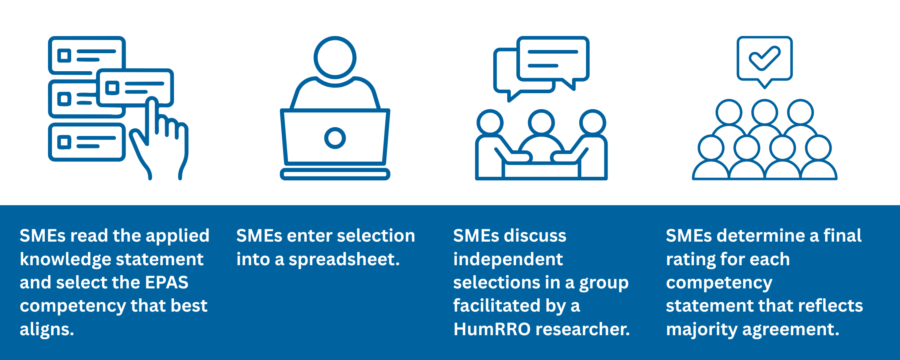
Scientists from the Human Resources Research Organization (HumRRO) developed the methodology and facilitated the two-day workshop in September 2025. Using calibrated independent judgment followed by group deliberation, the subject matter experts rated all 109 applied knowledge statements against the nine CSWE competencies, achieving consensus through discussion.
Educational competencies and licensure exam blueprints closely align
The study found that all nine CSWE competencies were represented across the 109 applied knowledge statements that form the content of the Masters exam, demonstrating the breadth of the exam content across the CSWE competencies required of social work graduates.
Key findings include:
- Assessment and intervention knowledge are most frequently represented in the applied knowledge statements, with more than half of the ASWB applied knowledge statements aligning with the two CSWE competencies describing those knowledge areas.
- A high level of subject matter expert agreement that ethical and professional behavior is foundational to practice suggests that the social work profession has a shared understanding of where ethical obligations fit and their importance.
“We are proud to have taken the initiative to bring together the educational and regulatory communities to refine our understanding of the relationship between educational standards and entry-to-practice standards for licensure,” said ASWB CEO Stacey D. Hardy-Chandler, Ph.D., J.D., LCSW, PGDip. “The study’s findings offer reassurance to aspiring social workers that their social work education is closely connected with exam content and professional practice. This undertaking also builds bridges between professional sectors, presenting opportunities for further collaboration and coordination throughout the professional ecosystem.”