

Regulatory Research Committee selects projects on supervision and artificial intelligence in social work practice and regulation
In August 2026, the ASWB Regulatory Research Committee finalized a two-year cycle of requesting, evaluating, and selecting regulatory research proposals. The committee, made up of volunteer regulatory board members, met to make funding decisions on proposals for research into social work supervision and technology use in social work. They selected four projects from among two dozen high-quality submissions to receive a total of nearly US$400,000 from ASWB.
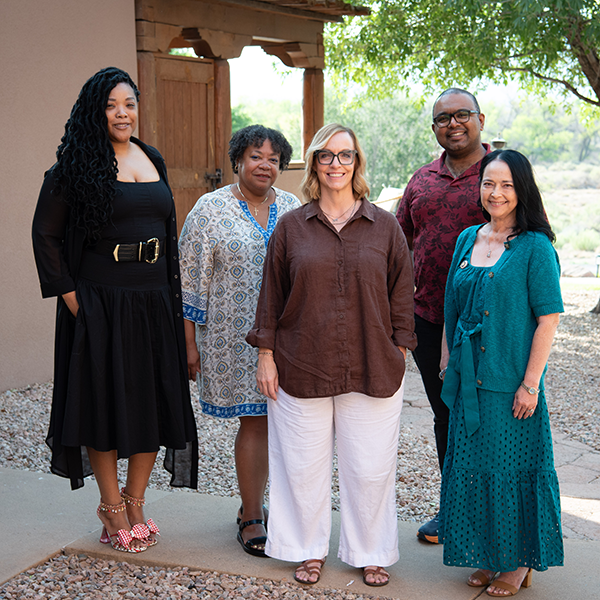
“We were impressed by the quality of the proposed research,” said the committee chair, Amy Ashton-Williams of Oregon. “Every proposal offered something of value, so we were challenged to select a combination of projects that we believed would be most helpful to our regulatory colleagues in the United States and Canada in promoting social work regulatory best practices and informed decision-making.”
One researcher will analyze the relationship between the quality of supervisor regulation and the availability of social work services in communities. Other supervision-focused research examines questions around the contribution of supervisors to social worker preparedness for practice and the development of an assessment tool for supervision. A technology-focused project will assess the ways in which artificial intelligence has been adopted in social work practices and the methods of oversight currently being used in regulation. Read on for more on the selected projects.
This was the second time ASWB funded regulatory research through a competitive, member-driven process. The first RFP, awarded in 2023, resulted in multiple published articles that contributed to the body of knowledge available to regulators as they make evidence-based decisions. Read the final update on those research projects.
State Regulation of Clinical Supervision and LCSWs’ Density and Earnings: Zip Code Level Analyses
Researcher: Joy Kim, Ph.D., MSW, of Rutgers, the State University of New Jersey
Behavioral health workforce shortages and access to mental health services, particularly in rural and underserved communities, have become a national concern. Occupational regulation has emerged as a critical contributor to the problem. Because supervised clinical practice is a vital mechanism through which clinical social workers gain competence and prepare for independent licensure, state regulation of clinical supervision for Licensed Clinical Social Workers is mandated. The rigor of these state regulations varies, but it remains unknown how this variation affects LCSW density, geographic distribution, salaries, and overall earnings.
Amidst the growing debate over whether occupational regulation restricts the growth of the behavioral health workforce, this study aims to examine how the rigor of state clinical supervision regulation influences the geographic density of LCSWs and LCSW salaries and earnings across ZIP code areas in the United States. These findings will provide the first national empirical evidence on the link between clinical supervision regulation and the density and compensation of clinical social workers. Ultimately, the study will produce evidence to inform policy decisions by licensing boards, legislators, educators, and workforce advocates seeking to balance workforce equity with public access to behavioral health services.
Modifiable Predictors of Social Work Licensure Preparedness and Examination Outcomes: A Mixed-Methods Regulatory Research Study
Researcher: April Viverette, University of North Alabama
While substantial attention has been devoted to examination outcomes and disparities, comparatively little research has identified the modifiable factors that contribute to candidates’ preparedness for licensure and examination success.
This explanatory sequential mixed-methods study identifies actionable, modifiable factors — supervision quality, perceived organizational support, and financial well-being — associated with self-reported preparedness for licensure and self-reported examination outcomes among social workers and licensure candidates. Findings will generate evidence-informed recommendations that strengthen supervision practices, reinforce licensure-preparation supports, and inform regulatory decision-making while maintaining the public protection mission of professional licensure.
Going beyond hours: Assessing the quality of social work supervision
Researcher: Mimi Choy-Brown, Ph.D., University of Minnesota, & Karen Sewell, Ph.D., Carleton University
The study advances the development of competent and ethical social workers by rigorously generating and piloting a social work supervision quality assessment tool that is evidence- and practitioner-informed, valid, and pragmatic for widescale use.
Social work regulatory communities charged with assuring public safety make critical decisions about social work supervision that are highly significant for the social work workforce and the public. Currently, these decisions are made with the best available information, which currently does not include indicators of relationships between current supervision conditions and regulatory outcomes. This project will build on existing guidelines and empirical and practice-based knowledge to generate a social work supervision and regulatory outcomes framework (aim 1), develop an assessment tool of the regulatory outcomes of quality social work supervision through aim 1 findings integration and prioritization (aim 2), and conduct a pilot test of the feasibility, appropriateness, and psychometric characteristics of the assessment tool (aim 3). The project will produce a strengthened foundation to further uncover regulatory outcomes of social work supervision and inform the judicious use of limited resources to promote competent and ethical social work practice for the public good.
Maintaining Public and Professional Protection in the Age of AI: A National Assessment of AI Adoption and Oversight in Social Work Practice
Researchers: Elizabeth Matthews & Lauri Goldkind, Fordham University
As artificial intelligence becomes increasingly integrated into professional practice, social work regulators, employers, and educators face urgent questions regarding safe, ethical, and accountable use of these technologies. The study will provide the first national assessment of AI adoption and oversight among licensed social work practitioners, generating evidence to inform professional standards, workforce development, organizational oversight, and regulatory decision-making.